
Theoretical Framework
Name the theory you are using and its constructs, and get a theoretical framework diagram you can edit. Below are theoretical framework examples built on three widely used theories: the Theory of Planned Behaviour, the Health Belief Model and the Technology Acceptance Model.
What Is a Theoretical Framework?
It is an existing theory you use to explain your research problem, chosen because it predicts the relationships you study.
Theoretical Framework Definition and Source
It comes from a named theory with published constructs and relationships. Cite the original source and keep the construct names. Begin by naming the theory and locating a reliable account of its constructs. Use the original meanings in your diagram unless you explain how you adapt them to fit the present study.
Map your study variablesTheoretical or Conceptual Framework in Research
The theory gives a reason to expect each relationship, which justifies your hypotheses and your choice of variables. A theory can help the reader understand why a specific pattern is expected. State which relationship travels from the theory into your study and what question remains open for the research to answer.
Draft a medical illustrationTheoretical Framework for Quantitative Research
Each construct needs a validated measure. Many theories have standard questionnaires you can adapt. Identify a measure for each construct you are carrying forward. A short note in the theory-based diagram can make it clear how an underlying idea relates to the instrument or observation your study will use.
Map a research methodologyModels from Three Established Theories
Three established theories drawn as diagrams. Rename the constructs to match your topic and measures.
Theoretical Framework Example in Research on Behavior
Compare the displayed examples for vaccination and screening. The names and arrows carry theory-specific meanings, which is why they should be checked against the chosen theory before reusing a layout.
Browse graphical abstract examplesExample of Theoretical and Conceptual Framework in Technology Research
Follow the Technology Acceptance Model example to see how the visual puts related constructs close together. Use the separation between constructs and outcomes to plan which parts of your own theory are most useful to display.
Design a scientific poster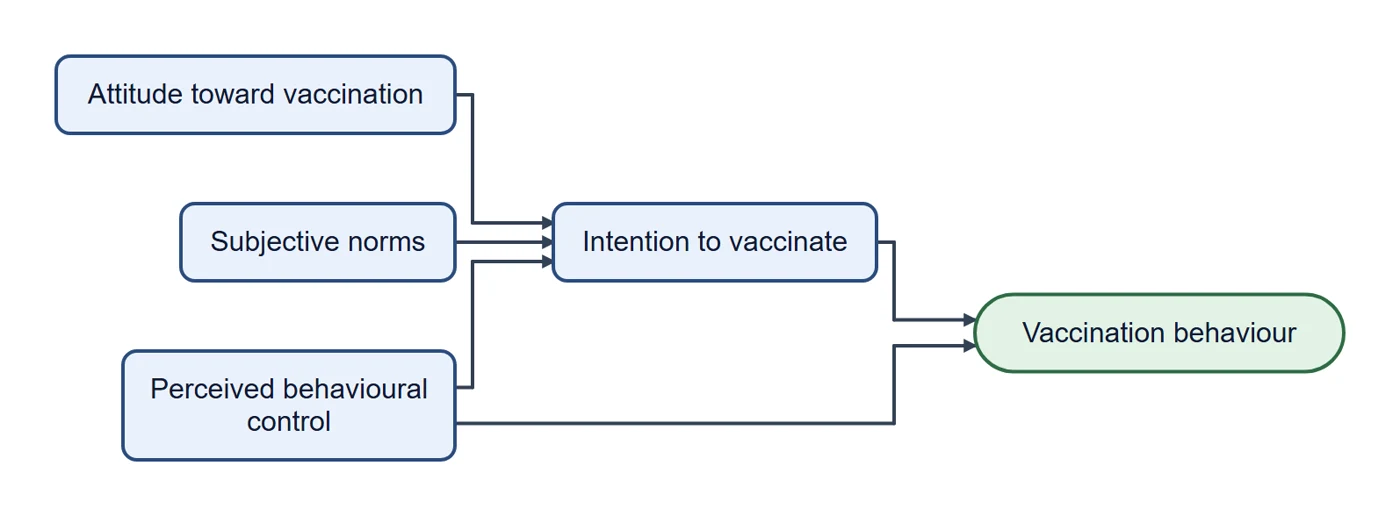
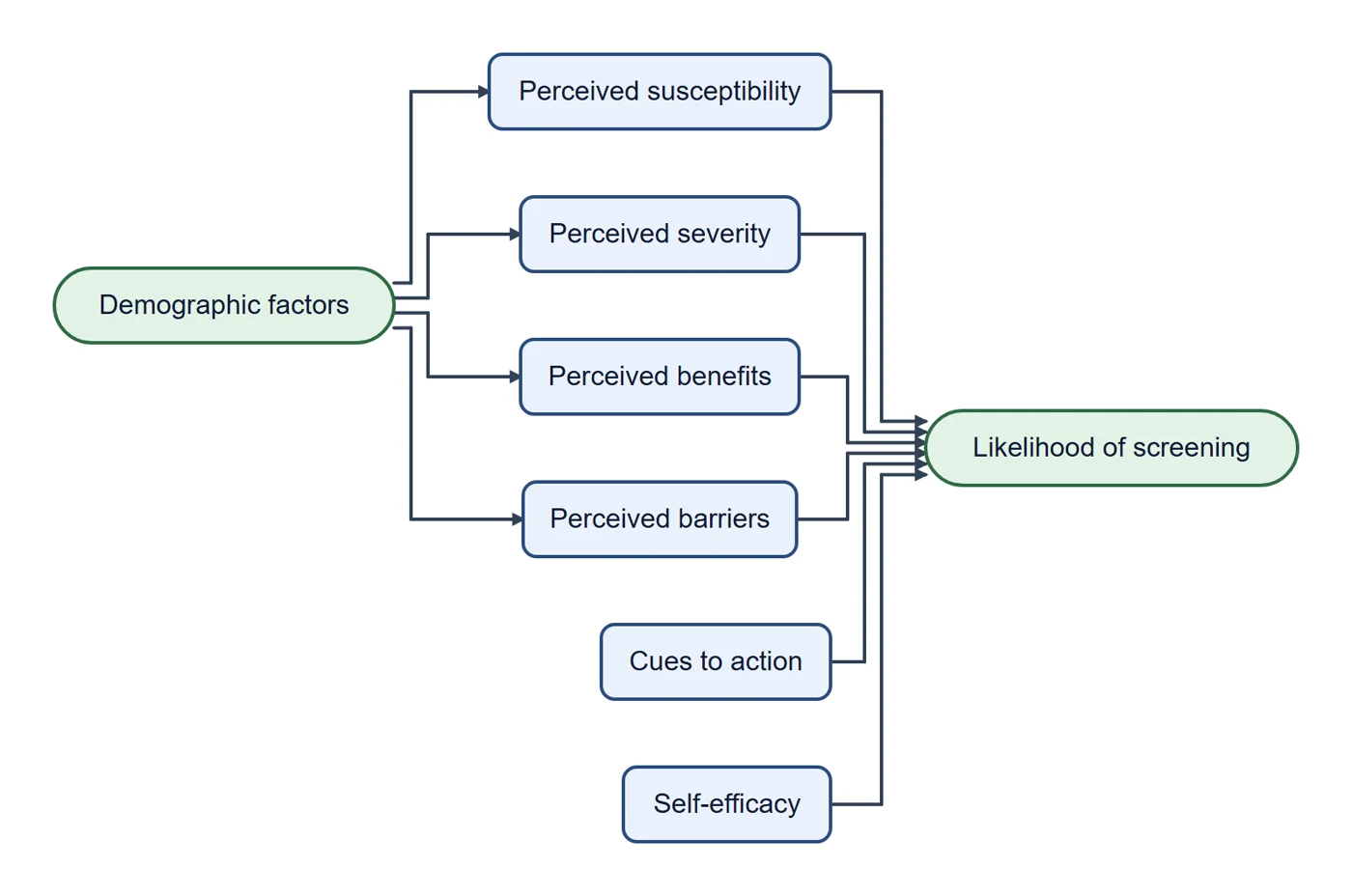

Each example is unedited output of this generator from a one-paragraph description written for this page. The studies are illustrative, not published research.
Why Use Our Theoretical Framework?
A diagram can help you discuss a study model with a supervisor while it is still evolving. Give the generator the exact constructs and source relationships so you can check the structure once it is drawn.
Theoretical and Conceptual Framework in an Early Draft
Draft a picture while writing the section, so you can see which links your explanation relies on. The editor lets you revise a label when the source calls for a more precise term.
Write a figure legendTheoretical vs Conceptual Framework in One Study
Keep a record of which paths are taken from the cited theory and which relationships you propose for your own analysis. That record is useful when a headline or figure legend must explain the scope of the model.
Map a research methodologyRubric for Theoretical and Conceptual Framework in Research
A reviewer can use the figure alongside the methods to see whether the research design addresses the theoretical claim. Share both together so they can check whether a relevant construct lacks a corresponding measure or question.
Compare scientific figure workflowsConstructs, Relationships and Context
A clear framework diagram shows the theory's structure and where your study fits in.
Theoretical Framework Diagram Constructs
Use the theory's own construct names, then add your operational terms in brackets if needed. Use the vocabulary of the original account when naming a construct. Add a brief definition alongside the study model diagram if the term could be confused with an ordinary use of the same word.
Draft an editable scientific figureTheoretical and Conceptual Framework Relationships
Draw only the paths the theory proposes, plus any extension you are testing, marked clearly as your addition. Trace each arrow to a relationship described in the source. If your project adds a proposed extension, describe it explicitly and use a distinct line or label so it can be identified on the figure.
Explore scientific color palettesTheoretical and Conceptual Framework Elements in Study Context
Add the population or setting in the title or a note so readers know where the theory is being applied. Write down the setting and the behavior that the framework is being used to explain. Compare those details with the source to see which parts of the account apply directly and which ones depend on an adaptation.
Make a graphical abstractHow to Draw a Theory-Based Model in 3 Steps
From theory to diagram in three steps.
- 01
Theoretical or Conceptual Framework for Your Research Question
Pick the theory that best explains your research problem and list its constructs and proposed relationships. Choose the constructs that are relevant to the question and copy their precise names into the brief. List the original relationships before you add any study-specific context.
Browse sample research posters - 02
How to Create Theoretical Framework Diagrams from a Brief
Describe the constructs and arrows above, naming your behaviour or outcome. The diagram opens in the editor. Describe each connection in words so you can verify it in the generated layout. Check the displayed credit cost before generating. New accounts get 30 free credits, and editing the diagram afterwards is free. In the editor, compare the result with the original theory.
Map your study variables - 03
Theoretical or Conceptual Framework in a Figure Legend
Mark any extensions you add, check the arrows against the original theory and export for your thesis. Use the caption to identify the theory and explain how the figure applies it to a particular study. Before saving the diagram for a paper or slide, verify that any extensions are visually distinguishable.
Read the Nature figure guidelines